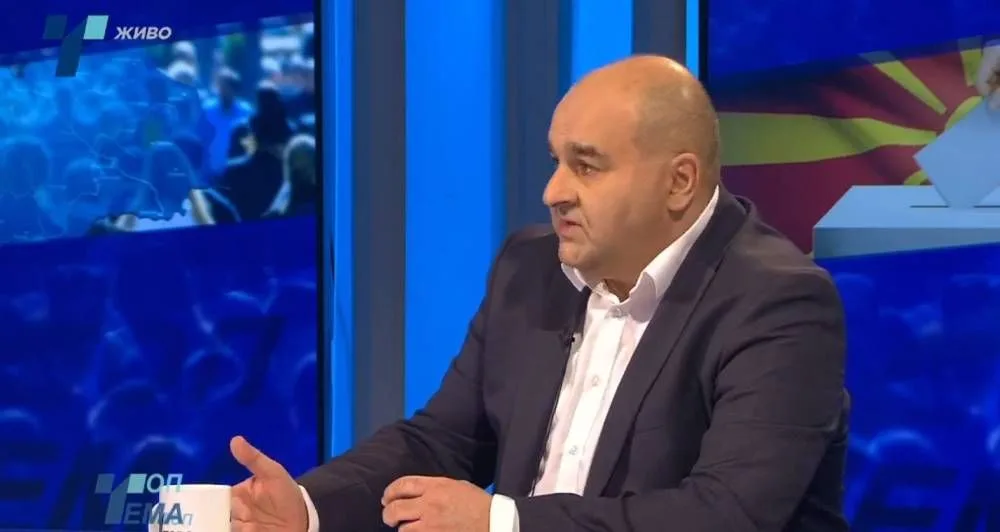
Orhan Murtezani, a government advisor on the reform agenda and former Minister of European Affairs, remains confident that North Macedonia will top the Western Balkans in the European Commission's upcoming progress reports. Speaking to Sitel, he acknowledged existing systemic challenges but emphasized that the government is actively seeking solutions.
"I persistently claim that in the next reporting period, Macedonia will be the leading country in the Western Balkans in terms of implemented reforms and the funds tied to those reforms," Murtezani stated.
When asked whether EU accession negotiations could be unblocked without the constitutional inclusion of the Bulgarian minority, Murtezani argued that the current reform path is the most effective way to signal commitment to Brussels. He believes that demonstrating full compliance with internal responsibilities is the most important step in proving the country's genuine dedication to European integration.
Meanwhile, the political landscape remains polarized. The opposition SDSM has accused the government of pursuing an anti-Western agenda, citing Deputy Prime Minister Ivan Stoilkovic's recent participation in a China-led summit as evidence of a shift away from Euro-Atlantic priorities.
In response, the ruling VMRO-DPMNE dismissed these accusations, framing their policy as a defense against foreign dictates. Party spokesperson Valentin Manasievski stated, "This state policy, in which we do not accept blackmail and dictates from official Sofia, is not liked by Bulgaria or their special envoy in Macedonia, Venko Filipce."
Despite the domestic political friction, the European Commission recently approved a financial package for the region under its Growth Plan. North Macedonia is set to receive 65.7 million euros, surpassing allocations for Albania and Montenegro, following positive assessments of its progress in education and digital transformation.