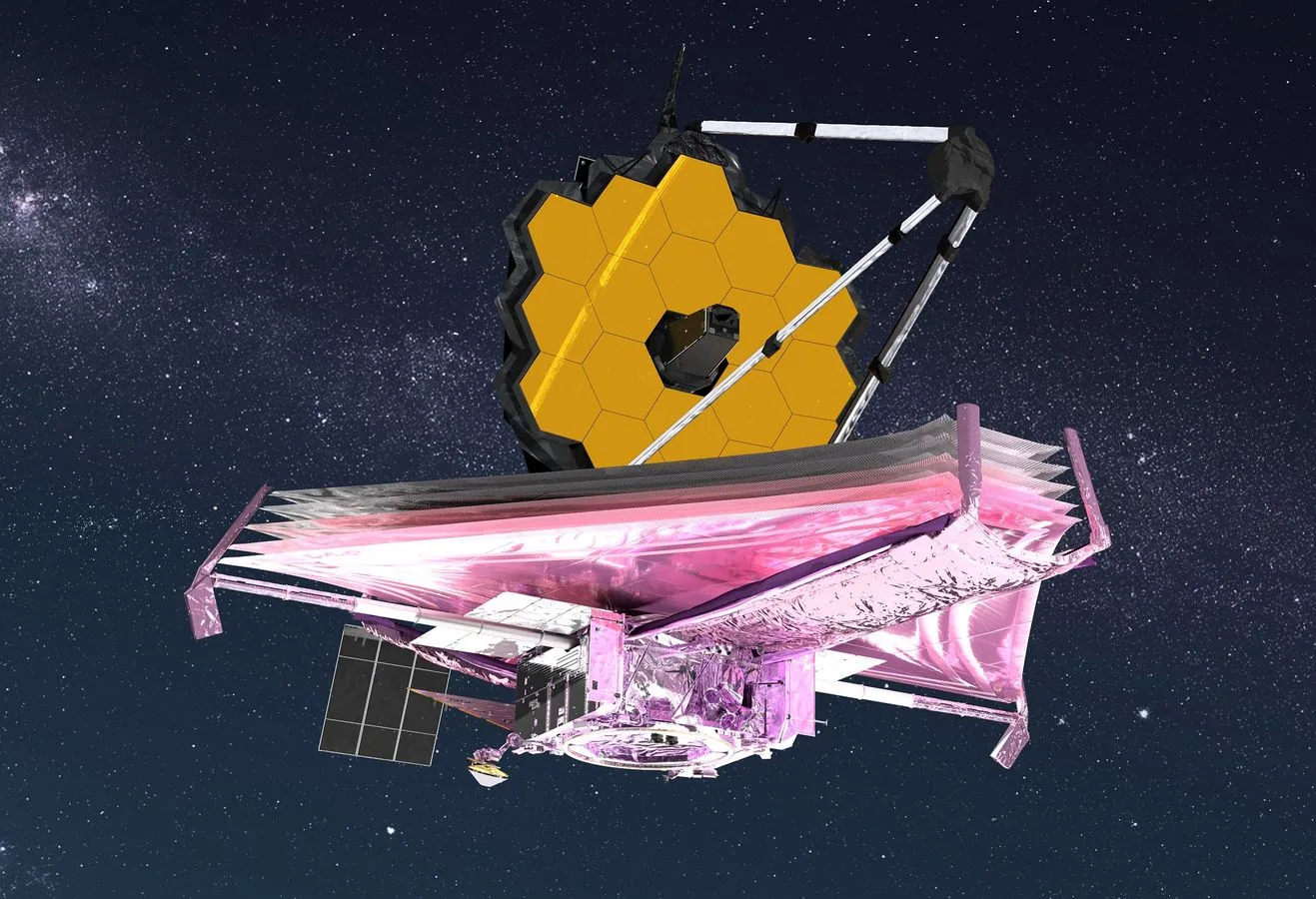
Astronomers utilizing the James Webb Space Telescope (JWST) have identified a giant stellar bar within the distant galaxy GN20, as it appeared just 1.5 billion years after the Big Bang. This remarkable finding is currently challenging long-held theories regarding how galaxies formed and evolved in the early universe.
Stellar bars are elongated structures composed of stars that extend across the center of a galaxy. They serve as critical engines for galactic evolution by funneling gas toward the core, which in turn triggers intense star formation, fuels central black holes, and helps construct dense galactic nuclei. Our own galaxy, the Milky Way, possesses a similar structure.
Traditional cosmological models suggested that the early universe was far too rich in gas and turbulence to allow for the formation of such structures. It was previously believed that stellar bars required several billion years to develop. Therefore, the discovery of a bar measuring roughly seven kiloparsecs in length in GN20 has significantly surprised the scientific community.
By leveraging the MIRI and NIRCam instruments on the JWST, researchers were able to peer through dense clouds of cosmic dust to map the galaxy's internal structure. Observations confirmed by the Northern Extended Millimeter Array (NOEMA) showed a strong correlation between the stellar bar and the distribution of dust, illustrating the intimate connection between stars, gas, and dust in galactic evolution.
Scientists now hypothesize that the highly turbulent gas within the galaxy actually played a vital role in stabilizing and accelerating the growth of this structure. This suggests that early galaxies were capable of developing complex organization much faster than previously assumed.